
Buying a Used Mobile Home in a Texas Park: 15-Point Condition Checklist
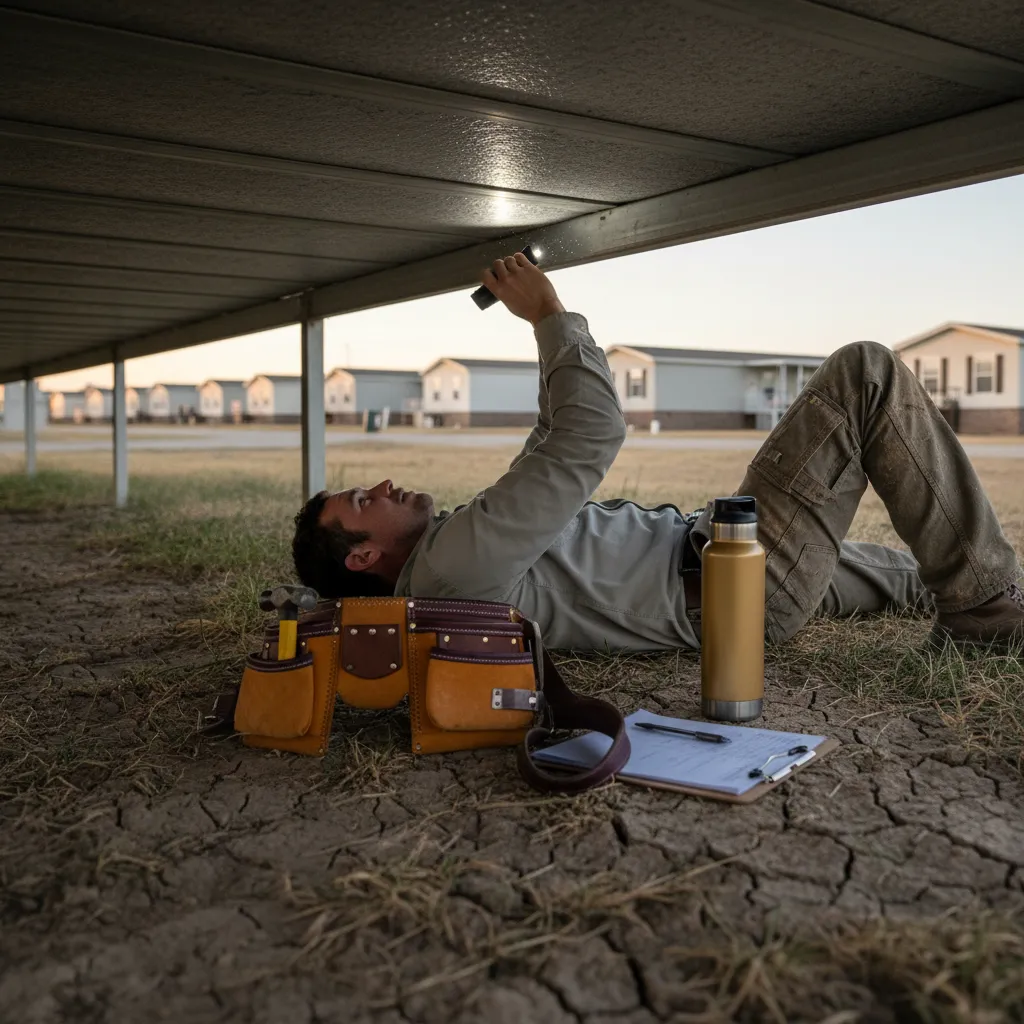
A used mobile home in a Texas park is one of the most affordable paths to homeownership — and also one of the easiest to overpay on. Unlike a site-built house, a manufactured home has hidden systems (belly wrap, tie-downs, chassis, duct trunks) that most generic inspectors don't touch. This 15-point checklist is what an experienced Texas buyer's broker actually looks at before signing. Run it at every showing. Anything you can't verify, price into your offer or walk.
Quick Answer: Inspect the used mobile home's roof, siding, skirting, belly wrap, tie-downs, floors, walls, windows, HVAC, plumbing, electrical panel, HUD label and data plate, serial number match, title standing, and park fit. Hire a manufactured-home specialist ($350–$600), not a generic inspector. Never waive inspection on a used park home.
The 15 Points (In Order of Expense If You Miss Them)
1. Roof
Walk the home if you can do it safely. Look for soft spots near vents and pipe boots, sagging ridge lines, and any asphalt shingle curl. Metal roofs should have all screws present and washers intact. Get an estimate on life left — a full re-roof on a doublewide runs $4,500–$12,000 in Texas in 2026.
2. Siding and Seams
Vinyl and hardboard panels should be flat, not rippled. Open seams invite wasps, rot, and rodents. Check the bottom 18 inches for water staining — a tell of gutter failure or bad skirting ventilation.
3. Skirting
Good skirting protects the belly wrap, plumbing, and HVAC ductwork. Check for vents every 8 feet, access doors that actually open, and no obvious rodent holes. Replacement cost: $1,500–$4,000 for a standard doublewide.
4. Belly Wrap and Underbelly
The belly wrap is the black poly sheet that seals the underside of the home. Tears mean water, rodents, and insulation loss. Budget $1,200–$3,500 to repair significant damage. Full replacement on a doublewide runs $3,000–$6,500.
5. Tie-Downs and Anchors
Texas requires engineered tie-down systems. Look under the home with a flashlight: you should see helical or auger-style anchors with straps up to the chassis every 8–10 feet. If you see nothing, cinder blocks, or rusted straps, budget $400–$1,500 for retrofit.
6. Chassis and Frame
The I-beam chassis should be straight, no visible rust-through. Light surface rust is normal; flaking rust with scale is a red flag. A bent or cracked chassis is fatal — walk away or offer salvage prices.
7. Floors
Walk every room in bare feet. Soft spots near tubs, toilets, kitchen sinks, or washer hookups = active or recent water damage. Pressing a quarter-inch in is minor; more than that is structural.
8. Walls and Ceilings
Water stains on ceilings near plumbing walls or roof penetrations indicate ongoing or repaired leaks. Ask the seller directly: "Has this roof ever leaked?" Compare their answer to what you see.
9. Windows and Doors
Open every window and close every door. Stuck windows often mean chassis settling or frame issues. Fogged double-panes just need replacement ($200–$400 each).
10. HVAC and Ductwork
Central systems in older mobile homes often fail at the duct trunk under the home — rats chew insulation, wraps fail, and efficiency tanks. Run the HVAC during the inspection; the return should be strong, and the supply vents should all deliver similar temperature air. Duct repair: $400–$2,000.
11. Plumbing
Galvanized supply lines in a 1980s home = replace soon. Polybutylene gray pipes (1978–1995) are a known failure point; insurance companies will often refuse coverage. PEX or copper is ideal. Check under every sink for active leaks or corrosion.
12. Electrical Panel
Federal Pacific and Zinsco panels are known fire risks — replace, don't negotiate. Standard 100A or 200A panels from reputable brands (Square D, Eaton, GE) are fine if properly wired.
13. HUD Red Label (Certification Label)
On the exterior of every section, look for the red HUD label — a small red metal tag. This proves HUD Code compliance post-1976 and is required for financing. Missing labels are costly to replace and can derail deals.
14. Data Plate
Inside the home (usually in a kitchen cabinet, closet, or utility area), the data plate lists serial number, wind zone, roof load, HUD labels. The serial should match the TDHCA Statement of Ownership and the HUD label. See our HUD tag and data plate guide for photos and details.
15. TDHCA Statement of Ownership
Before you pay a dime, verify the SOL shows the seller as current owner, no active liens, and the home serial matches what you're inspecting. See our Statement of Ownership guide for the how-to. Also read our full inspection guide for photo examples.
Mobile Buy Buy is a TDHCA-licensed manufactured home broker (MHDBRK00003606), not a TREC-licensed real estate brokerage. We help you find and buy the home itself; for land purchase, we partner with TREC-licensed realtors and can refer you.
Typical Cost of the 15-Point Check
| Item | Your Time | Professional Inspection |
|---|---|---|
| Walk-through with checklist | 60–90 min | Included |
| Manufactured-home specialist inspection | — | $350–$600 |
| HVAC technician check (optional) | — | $85–$150 |
| Electrical check (optional) | — | $100–$200 |
Common Park Issues That Override the Home Itself
A great used home in a failing park is a bad buy. Things to ask the park manager and 2–3 current residents:
- How many times has lot rent increased in the last 5 years?
- Who owns the park now — corporate, family, or REIT?
- Are there pending rule changes (pet limits, age caps, short-term rental bans)?
- Has the park had any recent zoning or utility issues?
- Is the park at full occupancy? (Vacancy = weakening demand.)
See mobile home park vs private land for the broader tradeoff.
When to Walk Away
- Chassis damage, not just surface rust.
- Missing HUD label and no data plate — you may never finance or resell this home.
- Active roof leak plus mold odor plus seller refusal to negotiate.
- Seller cannot produce a clean Statement of Ownership.
- Park refuses to approve your tenancy or has notice of closure.
- Pre-1976 home (pre-HUD Code) — this is a sellers-only market.
When to Buy Despite Issues
Used mobile home buyers who never buy anything with problems rarely buy anything at all. Used park homes always have something. What matters is whether the known problems fit your budget and timeline. A $45k home needing $4k of repairs is often a better buy than a $65k home that looks pristine. For related perspective, see why a used manufactured home might be smarter than new.
Want a professional second opinion before you buy?
Related Reading
Before you negotiate, read manufactured home foundation types. Before you close, confirm your rights in our Texas manufactured home park resident rights guide.
Informational only — not legal, tax, financial, or real estate advice. Building codes, park rules, and inspection standards change; verify current figures with TDHCA, your inspector, or a licensed professional before acting.
Frequently Asked Questions
How much does a used mobile home inspection cost in Texas?
A qualified manufactured home inspection in Texas typically runs $350 to $600 depending on size, metro, and whether the inspector has to crawl the full belly. Budget toward the high end if the home is older than 1995 or has any signs of prior water damage. Hiring a cheap generic home inspector who doesn't specialize in mobile homes is false economy.
Should I buy a used mobile home with soft floors?
Soft floors are not automatic disqualifiers but they are always expensive. Minor soft spots near a tub or kitchen sink may be $500–$2,000 to fix. Widespread soft floors from belly-wrap water intrusion commonly run $5,000–$15,000 and often reveal worse problems once opened up. Negotiate the repair cost into the price or walk away on older homes.
What HUD label issues should I walk away from?
Walk away if the HUD red label is missing or unreadable, if the data plate inside doesn't match the serial on the label, or if the seller "doesn't know where it went." Missing HUD tags can block FHA and VA financing, some park placements, and future resale. The cost to get a replacement label through HUD is real but doable if the underlying home is legal.
Do I need to inspect the park, not just the home?
Yes. Park financial health, pending rule changes, and planned rent increases all materially affect what you're buying. Talk to 2–3 current residents, review the park rules in writing, ask the manager about recent rent history, and search court records for ownership changes. A clean home in a failing park is a worse purchase than a rough home in a stable park.
How old is too old for a used mobile home?
Homes built before June 15, 1976 are pre-HUD Code and almost impossible to finance, insure, or place in most parks. Homes from 1976–1999 are sellable but limit your financing options and typically have outdated electrical and plumbing. For most buyers, 2000+ is the sweet spot between affordability and financeability; 2010+ is strongly preferred for FHA.
Can I negotiate repairs into the price?
Almost always yes on used park homes. Sellers price in "as-is" but rarely hold firm when a written inspection report shows specific dollar figures for specific problems. Ask for a price reduction equal to 80–100% of the estimated repair cost rather than asking the seller to do the work — their repair will usually be worse than yours.
What's the single most overlooked item on a used mobile home inspection?
Tie-downs and anchors. Most Texas manufactured homes are supposed to be anchored with an engineer-stamped tie-down plan; many older park homes are not. An unanchored home can fail in wind, void insurance claims, and block financing. A $400 anchor retrofit is cheap; learning you need one after the wind comes is expensive.