
How to Prepare a Manufactured Home for Texas Storm Season
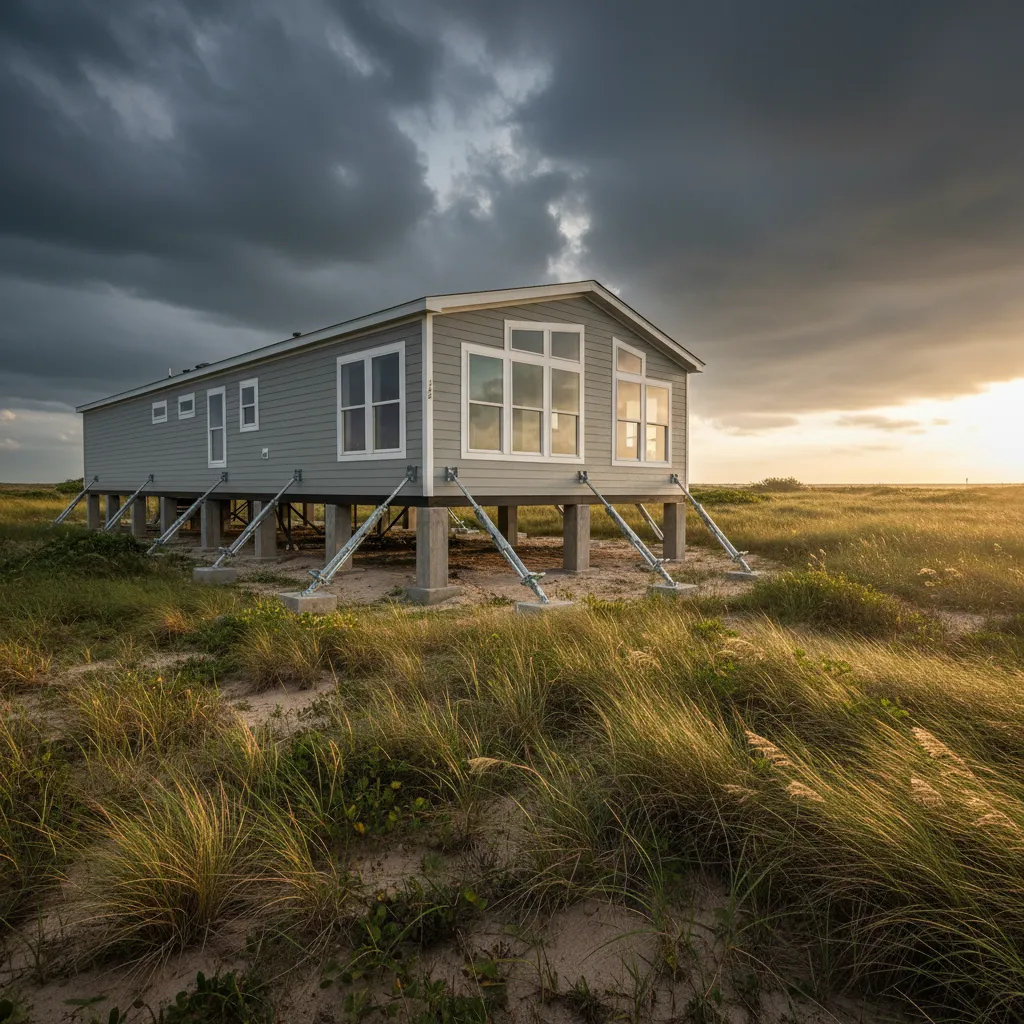
Texas storm season runs from late spring thunderstorms and tornadoes through the Atlantic hurricane peak from June 1 through November 30. Manufactured homes, because of their lighter structure and elevated floor systems, require extra planning to stand up to high winds. Proper tie-downs, verified HUD wind-zone rating, routine inspection, and a pre-storm checklist are the four things that actually protect a Texas manufactured home. This guide walks through each one in detail.
TL;DR: Texas is split into HUD Wind Zone II (coastal counties) and Wind Zone I (inland). Homes in Zone II must be rated for 100 mph sustained winds; Zone I homes are rated for 70 mph. TDHCA Installation Standards require approved ground anchors and tie-down straps on every home. Inspect annually before May, carry proper insurance (HO-7 plus TWIA in coastal counties), and always evacuate during hurricane or tornado warnings.
Know Your Wind Zone First
HUD divides the United States into three wind zones based on hurricane risk. Texas covers two of them:
| Zone | Wind Rating | Texas Coverage |
|---|---|---|
| Zone I | 70 mph sustained | Most inland Texas (Austin, DFW, most of Central TX) |
| Zone II | 100 mph sustained | Coastal counties within roughly 100 miles of the Gulf (Houston, Corpus Christi, Brownsville, Galveston, Victoria) |
| Zone III | 110 mph sustained | Not applicable in Texas |
A home placed in Zone II must carry a Zone II or Zone III wind rating on its HUD data plate. A Zone I home cannot legally be placed in a Zone II county. Verify the zone rating on the data plate (usually found inside a kitchen cabinet, bedroom closet, or near the electrical panel) before buying or moving any home. The HUD Manufactured Housing Program publishes the full wind zone map.
Read the HUD Data Plate and Certification Label
Every HUD-code manufactured home (built after June 15, 1976) has two tags that matter for storm prep:
- Red HUD certification label: A metal plate on the exterior that proves HUD-code compliance
- Paper data plate: An interior label that lists the wind zone, roof load, thermal zone, manufacturer, serial number, and installation specifics
Missing labels create problems for insurance, resale, and any TDHCA inspection. If a label is missing, request a label verification letter directly from the manufacturer or file a replacement request with HUD through the Institute for Building Technology and Safety (IBTS).
Tie-Downs and Anchoring: The Non-Negotiables
TDHCA Installation Standards (Texas Administrative Code, Title 10, Chapter 80) require every manufactured home to be anchored with ground anchors and tie-down straps. Installation must be performed by a TDHCA-licensed installer. The number of anchors depends on the home size and wind zone.
Typical anchor requirements:
- Single-wide in Zone I: 6 to 8 ground anchors plus vertical strapping
- Single-wide in Zone II: 8 to 12 anchors with heavier straps and frame-to-anchor connections
- Doublewide in Zone II: 14 to 20 anchors, often with both frame ties and over-the-top straps
Critical anchor system components:
- Ground anchors: Helical auger anchors (minimum 30-inch depth in soft soil, deeper in sandy coastal soils)
- Straps: Galvanized steel tension straps rated for the home's wind zone
- Frame ties: Connect the home's I-beam frame to anchors below
- Over-the-top ties: Additional straps across the roof required in Zone II
- Turnbuckles or tensioners: Maintain strap tension over time
Review the full standards at the TDHCA Manufactured Housing Division. Never attempt to install or re-tension tie-downs yourself. A miscalibrated tensioner can bend the frame or fail in wind.
Annual Pre-Season Inspection Checklist
Every April or early May, walk the perimeter of your home and inspect:
- Anchor heads: No tilting, no soil settlement or pooling around anchor shaft
- Straps: No rust-through, fraying, or broken strands
- Turnbuckles: Snug but not over-tightened; threads intact
- Skirting: No loose panels that could peel away and create uplift; ventilation openings clear
- Roof: No loose shingles, lifted seams, or visible fasteners backing out
- Windows and doors: Check seals; plan where shutters or plywood will mount
- Gutters and downspouts: Clear, securely attached
- Trees and overhanging limbs: Trim back anything that could fall on the home
- Loose yard items: Mental inventory of what will get secured or stored before a storm
Our manufactured home inspection guide covers broader annual maintenance beyond storm prep, and our skirting guide covers wind-resistant skirting installation.
When a Named Storm Is 72 Hours Out
Once a tropical storm or hurricane is in the forecast and the National Weather Service has issued watches or warnings for your county, work the following sequence:
- Check your evacuation zone via local county emergency management. Manufactured home residents in Zone II should assume evacuation.
- Fuel vehicles and check generators. Gas lines back up fast in a storm approach.
- Secure or store anything loose outside: patio furniture, grills, trash cans, toys, potted plants, decorations, ladders.
- Install shutters or plywood on exposed windows (3/4-inch plywood minimum, cut to fit, pre-drilled).
- Photograph the home exterior and interior for insurance documentation, including data plate and serial number.
- Move valuables to interior rooms away from windows.
- Shut off propane at the tank valve.
- Turn up refrigerator coldness to preserve food longer if power fails.
- Pack a go-bag: IDs, insurance docs, medications, 3 days of water and food, flashlight, battery bank, cash.
- Evacuate early if ordered, or if you are within 100 miles of the projected coastal landfall.
Track official forecasts through the NOAA National Hurricane Center and local county emergency management. Do not rely only on social media.
Insurance and FEMA Considerations
Three policy types matter for storm season:
- HO-7 manufactured home policy: Dwelling, contents, liability, loss of use. Wind and hail are usually covered with a separate deductible of 1 to 5 percent of dwelling value.
- TWIA (Texas Windstorm Insurance Association): Required in many coastal Texas counties because standard carriers will not cover wind. Apply through TWIA via a licensed agent.
- NFIP flood insurance: Standard policies do NOT cover flood. A separate NFIP policy through FEMA or a private flood carrier is essential for any home in a flood zone, and worth considering even outside mapped zones.
Our Texas manufactured home insurance guide breaks down HO-7 policies, typical costs, and wind/hail deductibles in detail.
Permanent Foundations and Storm Resistance
Homes on HUD-approved permanent foundations (full perimeter footing with frost-protected piers) perform measurably better in high winds than homes on pier-and-beam or runner foundations. The foundation ties the home to the earth, reduces uplift, and qualifies for conventional insurance and financing. If you live in Zone II, consider permanent foundation conversion not just for financing but for storm survivability. Our park vs private land article covers the foundation options available on owned land.
After the Storm: Documentation and Claims
Once it is safe to return:
- Photograph and video every angle of damage before moving anything
- Do NOT make permanent repairs until the adjuster has inspected
- Make only temporary repairs needed to prevent further damage (tarp, board-up)
- Save all receipts for temporary lodging, food, and materials
- File claims with your HO-7 carrier, TWIA if applicable, and NFIP if flood damage
- If the home is displaced or destroyed, contact TDHCA about Statement of Ownership implications
- Apply for FEMA individual assistance if the event is federally declared
Frequently Asked Questions
Can lightning damage my manufactured home more than a site-built home?
Lightning affects both similarly, but manufactured home electrical panels and ground systems should be inspected every 5 years. A whole-home surge protector at the main panel is an inexpensive upgrade ($200 to $600 installed) that protects appliances and the HVAC system from lightning-related surges.
Are newer manufactured homes safer in storms?
Yes. Post-1994 HUD code updates significantly strengthened construction standards, especially for Zone II. Homes built after 1994 are dramatically more storm-resistant than pre-1976 mobile homes or even 1976 to 1993 HUD-code homes. Always verify construction date on the data plate.
Do I need a storm shelter?
Manufactured homes offer almost no protection during a tornado. If you live in Tornado Alley sections of Texas (North Texas, Panhandle, parts of Central Texas), an on-site storm shelter or access to a community shelter is strongly recommended. FEMA P-320 and P-361 publications cover design standards.
How much does a tie-down inspection cost?
A TDHCA-licensed installer typically charges $150 to $400 for an anchor inspection on a single-wide and $300 to $600 for a doublewide, depending on region and travel. Re-tensioning or adding anchors is billed separately. Schedule before May to beat the summer rush.
Will FEMA help if my manufactured home is destroyed?
In federally declared disasters, FEMA Individual Assistance can provide temporary housing, home repair grants, and other assistance. Coverage is limited and does not replace insurance. Register quickly at DisasterAssistance.gov after any declared event.
Shopping for a storm-ready manufactured home in Texas, or unsure whether an existing home meets current wind zone and tie-down standards? Mobile Buy Buy represents buyers statewide and can verify HUD data plates, installation paperwork, and insurance posture before you commit. Call (737) 777-9437 or fill out our buyer inquiry form to get started.