
Manufactured Home Insurance in Texas: Coverage and Costs
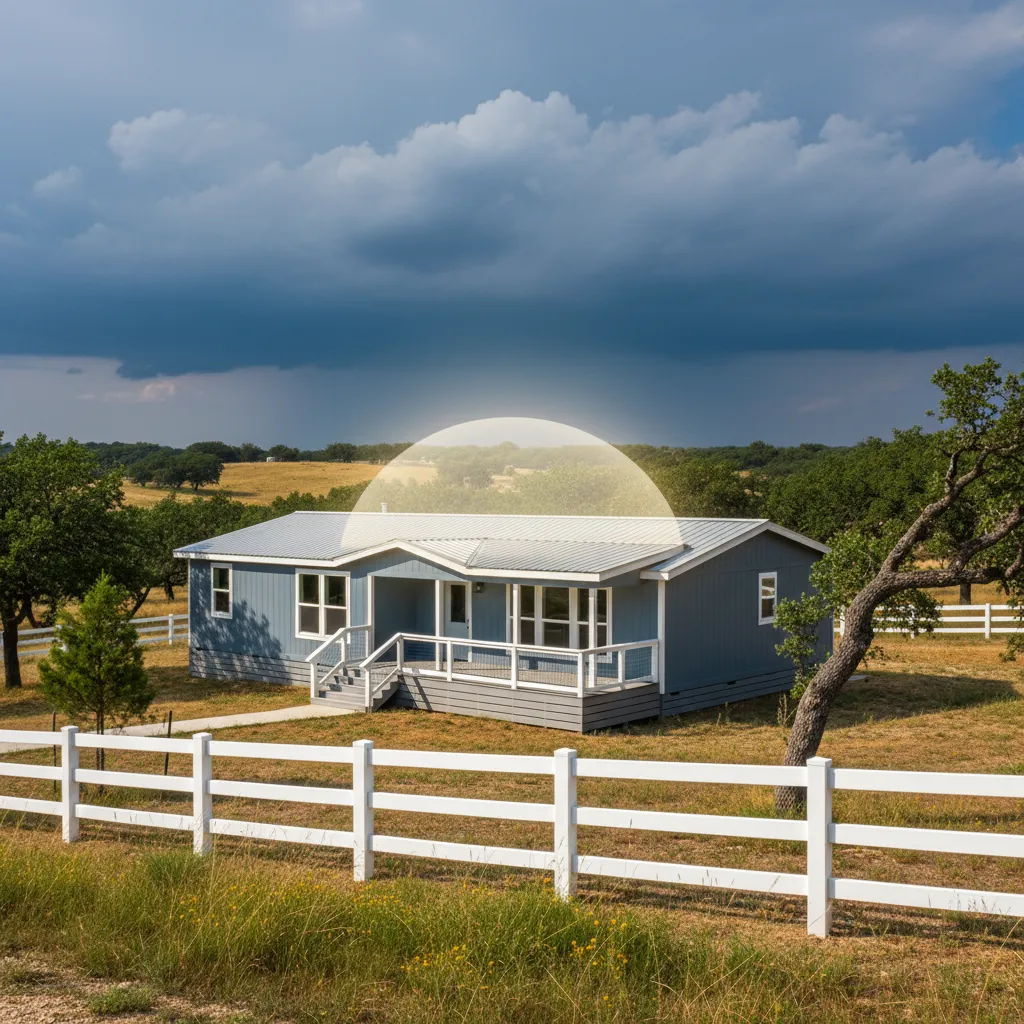
Manufactured home insurance in Texas is not the same as a standard homeowners policy. It uses a special form (HO-7) designed for the unique construction and risk profile of HUD-code homes, carries a separate wind and hail deductible, and in coastal counties may require a dedicated windstorm policy. Understanding how your coverage works, what it costs, and how to keep the premium reasonable is part of owning a manufactured home in Texas. This guide walks you through the essentials.
Quick Answer: Most Texas manufactured homes are insured on an HO-7 policy costing $700 to $1,500 per year for a typical $75,000 to $150,000 home. Wind and hail deductibles are usually 1–5% of dwelling coverage. Coastal properties may need a separate TWIA windstorm policy. Lenders require insurance while a loan is outstanding.
This article is general information about Texas manufactured home insurance and is not insurance, legal, or financial advice. Contact a licensed Texas insurance agent for a policy quote tailored to your home.
How Manufactured Home Insurance Differs From a Homeowners Policy
Manufactured homes face different risks than site-built homes. They are more vulnerable to wind uplift because of their lighter frames, more susceptible to total loss in fires because of compact construction, and often located in rural areas with longer response times. That is why insurers built a specific policy form — the HO-7 — for mobile and manufactured homes.
Key differences from a site-built HO-3 homeowners policy:
- Actual cash value by default: Dwelling coverage is often written on an actual cash value (ACV) basis (replacement cost minus depreciation). Replacement cost endorsements are available for a higher premium.
- Tighter wind and hail terms: Separate deductibles, sometimes exclusions in high-risk counties.
- Age restrictions: Many carriers will not write a new policy on homes over 20 or 25 years old without special inspection.
- Foundation and tie-down requirements: Home must be anchored per TDHCA and HUD standards or coverage may be refused.
- Trip coverage: Optional coverage for damage during a move.
What an HO-7 Policy Covers
A standard Texas HO-7 policy includes four core coverage areas plus optional endorsements:
| Coverage | What It Does | Typical Limit |
|---|---|---|
| Dwelling (Coverage A) | Repairs or replaces the home structure | 100% of home value |
| Other Structures (Coverage B) | Sheds, decks, detached garages | 10% of Coverage A |
| Personal Property (Coverage C) | Furniture, clothing, electronics | 40–70% of Coverage A |
| Loss of Use / ALE (Coverage D) | Hotel and living costs during repair | 20% of Coverage A |
| Personal Liability (Coverage E) | Legal liability for injuries/damage | $100,000–$500,000 |
| Medical Payments (Coverage F) | Guest medical bills | $1,000–$5,000 |
Common covered perils on an open-perils HO-7: fire, lightning, windstorm, hail, explosion, smoke, vandalism, theft, falling objects, and vehicle or aircraft impact. Flood is never covered by an HO-7 — you need a separate flood policy, usually through the National Flood Insurance Program (NFIP).
If you have just bought or are buying a home, getting a fresh manufactured home inspection helps your insurer price the policy correctly and gives you ammunition to contest underwriting denials based on condition.
What It Costs in Texas
Premiums vary by county, coverage limits, deductible, and home condition. As of 2026, typical ranges we see for Texas manufactured homes:
- Inland Central Texas (Austin, San Antonio, DFW metros): $700 to $1,400 per year for a $100,000 home.
- Rural Texas: $600 to $1,100 per year, but fewer carrier options.
- Coastal counties (Jefferson, Chambers, Galveston, Brazoria, Matagorda, Calhoun, Refugio, Aransas, San Patricio, Nueces, Kleberg, Kenedy, Willacy, Cameron): $1,200 to $2,500+ per year, plus a separate Texas Windstorm Insurance Association (TWIA) policy for wind.
- Older homes (pre-1994): 20–40% higher premium when available; some carriers will not write.
The Texas Department of Insurance publishes an annual premium comparison you can use to check whether your quote is competitive.
Wind, Hail, and Named Storm Deductibles
Texas has more hail damage than any other state and sits directly in hurricane and tornado paths. Insurers manage that exposure by applying a separate percentage deductible for wind and hail.
- 1% deductible: On a $120,000 dwelling, you pay the first $1,200 of wind or hail damage.
- 2% deductible: $2,400 out of pocket.
- 5% deductible: $6,000 out of pocket — common on older homes or in high-risk counties.
- Named-storm deductible: Often 2–5% and triggered when the National Hurricane Center names a storm that affects Texas.
These percentages are not the same as your all-other-perils deductible (often $1,000–$2,500 flat). Always read your declarations page carefully, because the wind deductible surprises most homeowners after their first hailstorm claim.
Tie-Downs, Foundations, and Anchoring Requirements
Texas insurers will almost always require a Texas-compliant tie-down and anchoring system before writing a policy. TDHCA's Manufactured Housing Division and the HUD wind zones together set the installation standards. Homes must meet the wind zone rating for the county where they sit:
- Zone I: Most inland Texas counties.
- Zone II: Coastal and near-coastal counties — stronger tie-down spacing, anchor sizing, and frame ties required.
Failing to anchor to standards can void a wind claim. If you are buying a used home or moving one, confirm with a licensed Texas installer that the anchoring meets the current wind zone requirements. The same checks apply whether you are in a community or on private land — see our guide to park vs private land for site-prep considerations.
How to Lower Your Premium
Several practical moves cut Texas manufactured home insurance premiums:
- Bundle your auto and home with the same carrier — saves 5–20%.
- Increase your all-other-perils deductible to $2,500 or $5,000 if you can handle the risk.
- Install wind mitigation features — impact-rated windows, storm shutters, reinforced roof straps, upgraded tie-downs.
- Maintain a clean claims history. Even small claims can cost more than they recover over five years.
- Add monitored smoke, fire, and security alarms.
- Update your home's roof — a new Class 4 impact-resistant shingle often yields a 10–25% hail discount.
- Confirm correct classification — the wrong year, square footage, or foundation type on your policy can cost hundreds per year.
- Shop every 2 years. The manufactured home insurance market churns and specialty carriers often beat incumbents.
Tax and regulatory considerations intertwine too. See our overviews of Texas manufactured home regulations and the HUD Manufactured Housing Division for the backstop rules carriers use when underwriting.
Frequently Asked Questions
Is flood insurance included in Texas manufactured home insurance?
No. Flood is never included in a standard HO-7 policy. If your home is in a Special Flood Hazard Area, you need a separate NFIP flood policy or private flood coverage. Many Texas manufactured homes sit in lower-elevation areas where even a few inches of flood can total the home, making a flood policy one of the most valuable adds.
Can I insure a pre-1976 mobile home in Texas?
Rarely. Most insurers will not write a new policy on a pre-1976 mobile home because it predates the HUD Code. Some specialty carriers will insure older homes with liability and named-perils coverage only, often at premium rates. Replacing a pre-1976 home is usually the better path.
Do I need insurance if I own my manufactured home outright?
Texas does not legally require it, but it is strongly recommended. A tornado, hailstorm, or fire can destroy your entire asset in minutes. Most manufactured home communities require at least personal liability coverage as a condition of the lease. Without coverage, you absorb 100% of any loss.
Does renters insurance cover my manufactured home if I rent it out?
No. If you rent out a manufactured home, you need a landlord (DP-3 or equivalent) policy covering the structure and liability, and your tenant should carry their own renters policy for their belongings. Some carriers offer manufactured-home landlord forms at modest premiums.
How long does a claim typically take?
For a small claim (hail damage, minor wind), expect 2–4 weeks from claim filing to payment. For a total loss after a named storm, 2–6 months is common in Texas, because adjusters are stretched thin after major events. Keep detailed photos of your home's current condition every year so you have evidence ready if disaster strikes.
Considering a manufactured home purchase in Texas and wondering what it will cost to insure? Mobile Buy Buy can help you estimate insurance costs alongside purchase price before you make an offer. Call (737) 777-9437 or submit a buyer inquiry.