
Manufactured Home Skirting: Types, Costs, and Texas Installation Guide
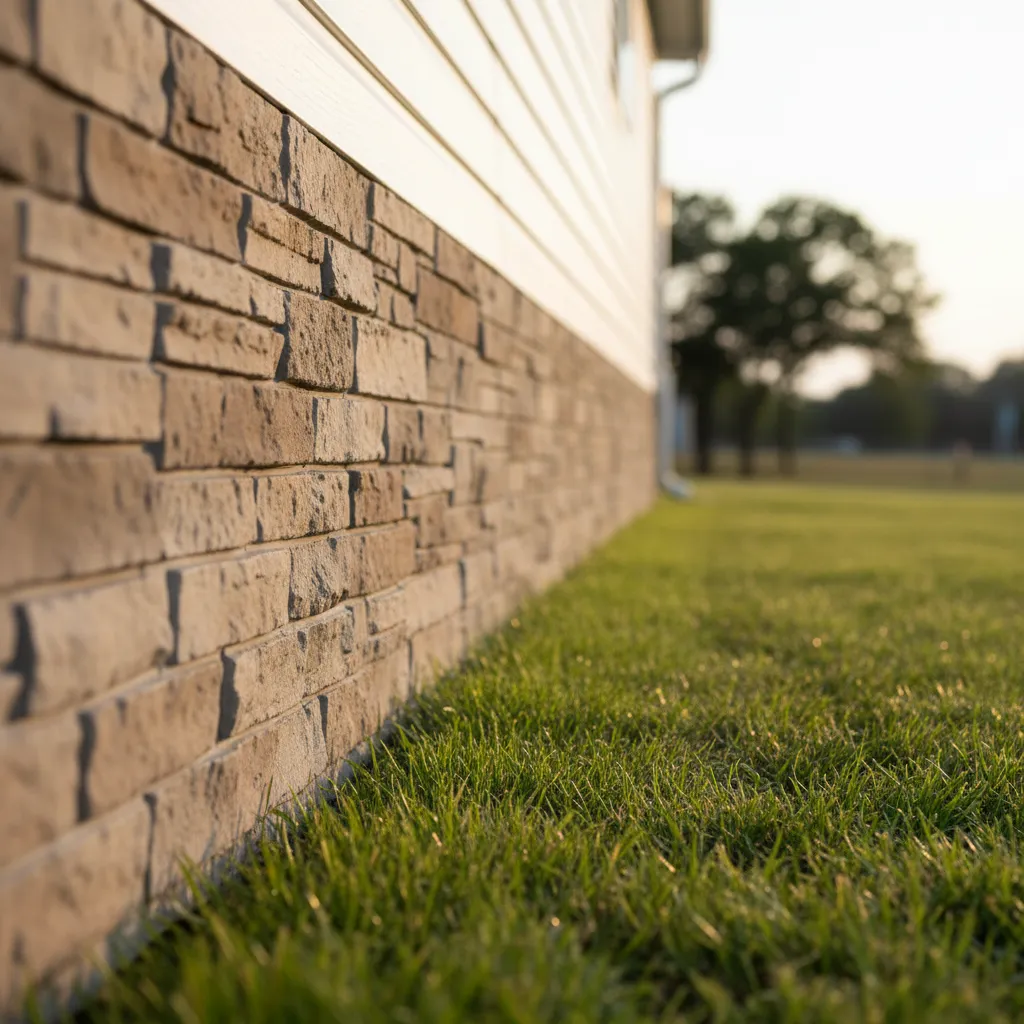
Skirting is the panel system that wraps the crawl space beneath a manufactured home, closing the gap between the chassis and the ground. In Texas, quality skirting is not optional: it protects plumbing from freezing, keeps pests out, satisfies HUD installation standards, and is required by virtually every lender, community, and insurer. The right skirting also improves energy efficiency and adds thousands to resale value. This guide walks through the four main skirting types, realistic Texas costs, ventilation rules, and how to choose based on your climate zone.
TL;DR: Vinyl skirting is the cheapest and most common option in Texas at roughly $400 to $1,500 installed for a single-wide. Faux stone and insulated vinyl offer better looks and R-value for $1,500 to $4,500. Real brick or concrete block skirting is the most durable and adds the most resale value at $4,000 to $10,000. Texas installation standards require 1 square foot of vent per 150 square feet of crawl space.
Why Skirting Matters More in Texas Than You Think
Texas weather is hard on the underside of a manufactured home. Summer heat bakes exposed pipes, winter freezes crack unprotected plumbing, spring flooding pushes debris into the crawl space, and rodents, snakes, and feral cats love an open belly. Skirting handles all of it at once.
Beyond protection, skirting is a line item in your financing and insurance. FHA, VA, and most conventional lenders require skirting as a condition of closing. TDHCA installation standards, enforced statewide by licensed installers, require skirting within a reasonable period after set. Parks typically require it within 30 to 60 days of move-in. Skip it and you risk policy denial, lease violation, or a failed appraisal.
- Pipe and duct protection: Keeps the belly out of direct sun and cold winds.
- Pest control: A sealed perimeter plus hardware cloth blocks rodents, armadillos, and snakes common in Central Texas.
- Energy efficiency: Cuts winter heating loss and keeps floors warmer.
- Curb appeal: A well-skirted home looks like a house, not a trailer.
- Resale value: Appraisers routinely dock $2,000 to $5,000 for missing or damaged skirting.
Comparing the Four Main Skirting Types
Every Texas manufactured home eventually lands on one of these options. Cost, durability, and insulation value vary widely.
| Type | Cost (Single-Wide, Installed) | Lifespan | Insulation (R-Value) | Best For |
|---|---|---|---|---|
| Vinyl | $400 to $1,500 | 8 to 15 years | R-0 (or R-5 insulated) | Budget, rental properties, Central TX |
| Metal | $700 to $2,000 | 15 to 25 years | R-0 | Rural, windy, high-pest areas |
| Faux Stone / Brick Panels | $1,500 to $4,500 | 20 to 30 years | R-3 to R-11 (foam-backed) | Suburban, mid-range resale |
| Real Brick or Concrete Block | $4,000 to $10,000 | 50+ years | R-1 (mass effect higher) | Permanent foundation, FHA/VA conversion |
Vinyl Skirting
Vinyl is the default for most Texas manufactured homes. It is cheap, easy to replace in pieces, and comes in dozens of colors. The downside is that it cracks in hard freezes, warps in direct sun, and flexes in high wind. Insulated vinyl (a foam-backed variant) pushes R-value up to about R-5 and resists denting.
Metal Skirting
Metal panels, usually galvanized steel or aluminum, handle wind and pests better than vinyl and last twice as long. They dent from weed whackers and rocks but do not crack. In Central and West Texas where wind is a factor, metal is often the better middle-ground choice.
Faux Stone and Brick Panels
High-density polyurethane panels that look like stacked stone or brick have become popular with buyers who plan to stay 10+ years. Installation is DIY-possible but tricky around corners. Resale appraisers treat these panels as a clear upgrade.
Real Brick or Concrete Block
Real masonry is the gold standard. If you are converting your manufactured home to real property under Texas law or qualifying for FHA/VA on a permanent foundation, a full perimeter masonry wall is often required. It costs more and requires a concrete footing, but it lasts essentially forever and can boost resale by $8,000 to $15,000.
Texas Code and TDHCA Ventilation Rules
Texas enforces the HUD Manufactured Home Installation Standards, administered by TDHCA. The most commonly missed requirement is ventilation. Without adequate airflow, moisture builds in the crawl space and rots the belly board, floor joists, and ducts within a few years.
- Minimum vent area: 1 square foot of net free ventilation per 150 square feet of crawl space.
- Placement: Vents within 3 feet of each corner, distributed evenly around the perimeter.
- Screens: Insect screen mesh (1/8 inch or smaller) required on every opening.
- Access panel: At least one removable panel, typically 18 by 24 inches, for plumbing and duct access.
- Ground clearance: Skirting should not trap standing water; the ground inside the skirting should slope away from the chassis.
For the full technical standard, see the HUD Manufactured Home Construction and Safety Standards and the TDHCA installation rules at tdhca.texas.gov/manufactured-housing.
DIY vs Hiring a Licensed Installer
Vinyl skirting is the realistic DIY project for a handy homeowner. A single-wide takes one or two weekends, and materials run about $300 to $600 at a big-box store. Kits come with a J-channel track, ground track, and pre-cut panels. Measure twice, allow for ground variation, and do not skip the vents.
For metal, faux stone, and any masonry skirting, hire a TDHCA-licensed manufactured home installer. Masonry skirting in particular requires a concrete footing tied into the ground below the frost line (minimal in most of Texas but still best practice). Getting the footing wrong voids the entire investment within a few years.
- Get at least three quotes itemizing labor, materials, vents, and access panel.
- Verify the installer's TDHCA license on the TDHCA license lookup.
- Ask for proof of liability insurance and workers comp.
- Get a written warranty, typically 1 to 5 years on labor and whatever the manufacturer warrants on the panels.
Pest, Moisture, and Storm Considerations
Good skirting does four jobs at once: blocks pests, manages moisture, resists storm damage, and lets air flow. In Texas, fire ants, termites, armadillos, and snakes are the primary crawl-space invaders. Install 1/4-inch galvanized hardware cloth behind the bottom 12 inches of any vented skirting to stop them without sacrificing airflow.
For coastal and hurricane-prone counties, FEMA recommends break-away skirting that releases under storm surge pressure rather than levering the home off its anchors. Check the FEMA regional guidance for Zone II areas. Inland, wind-rated anchors on the skirting tracks prevent the panels from peeling off in a straight-line thunderstorm.
Before you sign off on skirting, review your full inspection checklist to confirm the belly wrap, ducts, and plumbing insulation are intact underneath. Skirting hides problems, so fix them first.
Frequently Asked Questions
How tall should manufactured home skirting be?
Skirting height equals the distance from the ground to the bottom of the siding or rim joist. On a typical Texas set, this runs 24 to 36 inches on flat lots and up to 48 inches on sloped lots. Measure at the lowest and highest points of the chassis and buy to the taller number, then trim to fit. Most kits are sold in 26-inch, 36-inch, and 48-inch heights.
Does skirting help with Texas heat?
Yes. Skirting shades the belly wrap, ducts, and water lines from direct sun, which can reach 160+ degrees on exposed surfaces in summer. Insulated skirting adds R-5 to R-11 of thermal resistance, reducing floor cold spots in winter and cutting HVAC runtime year-round. Pair skirting with sealed ducts and a repaired belly board for best results.
Will insurance pay to replace damaged skirting?
Most manufactured home insurance policies (HO-7 in Texas) cover skirting under the "other structures" or dwelling-extension clause when damage is from a covered peril like wind, hail, or fire. Routine wear, cracking from age, or pet damage is not covered. File within the carrier's deadline (usually 30 days for wind/hail events) and include photos of pre-loss condition where possible.
Can I use skirting to convert my home to real property?
Skirting alone is not enough. Converting a Texas manufactured home to real property under Texas Property Code Section 2.001 requires a permanent foundation, which typically means a full perimeter masonry or poured concrete wall set below frost line and tied to the chassis with approved anchors. Standard vinyl or metal skirting does not meet the permanent foundation definition for FHA Title II or conventional mortgages.
How long does vinyl skirting last in Texas sun?
Quality UV-stabilized vinyl skirting lasts 10 to 15 years in Central and North Texas. South Texas and West Texas (El Paso, Laredo) see closer to 8 to 12 years due to higher UV exposure. Look for panels labeled "UV-resistant" or "10-year fade warranty" when buying. Plan to replace cracked or faded sections every few years regardless.
Shopping for a manufactured home and want to make sure the skirting, foundation, and installation are up to code? Mobile Buy Buy represents buyers, not sellers, so our inspection-first process catches skirting problems before you close. Call (737) 777-9437 or start a buyer inquiry and we will walk the property with you.