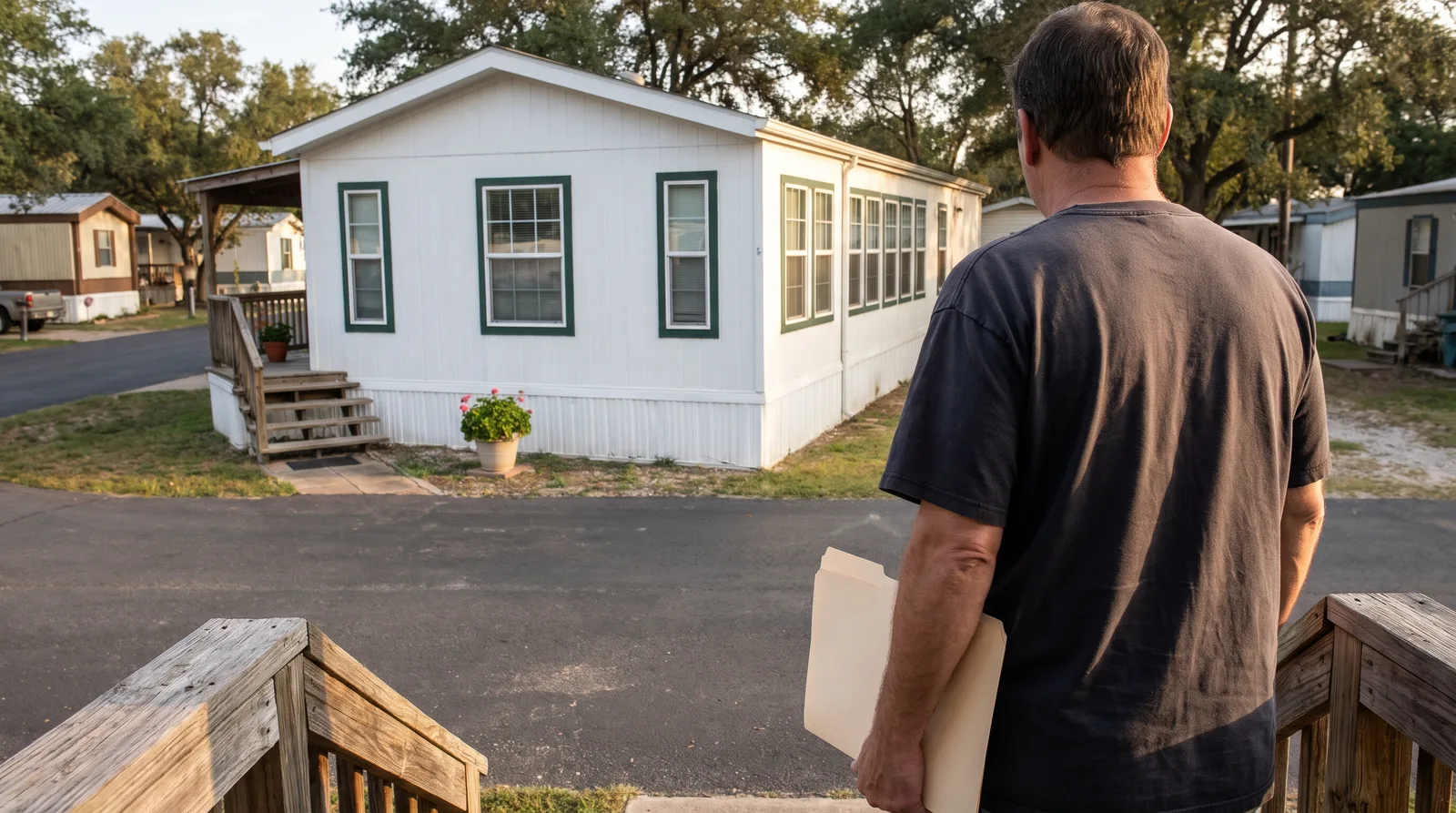
If the home will stay in its park, the park has to approve you before you can buy it. The parks where our buyers apply have asked them for a background check, proof of income, two years of tax returns and a Social Security number or an ITIN. Approval often takes a week or two and the closing waits for it, so start the park's application as soon as you're serious about a home.
"So I need to get approved by the park ??"
Yes, if the home is staying in its park. In the past year, 23 buyers asked us whether they had to apply to the park and how to do it, 16 asked what the park checks, and 6 asked how long approval takes or where their application stood. If the home is being moved out of the park, there's no park application to get through.
Why the park approves you before you buy
You'll own the home, but the park owns the lot under it. You don't take over the seller's lease. You get a new lease of your own with the park, so the park decides whether to rent the lot to you, and that decision has to come before the sale closes. Many of the park homes on our listings page say so, with lines like "park approval required" or "buyer must be approved by the community".
"Is the application for the home and park separate or the same?"
They're separate. You buy the home through us, and you apply to the park yourself, usually with the park office directly. If you're financing, the lender has its own application too, and the lender and the park each set their own requirements.
What parks have asked our buyers for
- A background check.
- Proof of income, such as recent pay stubs.
- Two years of tax returns.
- A Social Security number or an ITIN. The park uses it to check your identity and income.
Each park sets its own list. Some parks' screening also looks at past evictions, bankruptcies and credit, and some parks have rules about pets, vehicles and the age of residents, so ask about those when you ask for the application.
If you don't have pay stubs or tax returns, tell us early. Social Security income is usually accepted, and for buyers in that spot we've suggested bank statements or a co-signer.
Where the park fits when you buy
On a home that stays in its park, buying with us usually runs in this order:
- Pick the home. Tell us which one you want.
- Sign the purchase agreement. You pay a small deposit at this point.
- Apply to the park. Start sooner if you can. If you're financing, apply to the lender at the same time.
- Get approved. The park reviews your application and gives you its answer.
- Close. We schedule the closing once the park has approved you, and the lender too if you're financing.
The whole purchase often takes a few weeks, and how long depends on the park's approval and the paperwork.
When to apply
Apply as soon as you're serious about a home, and no later than the day you sign the purchase agreement, because some applications sit for weeks. You can ask us for the park's application before you sign. Gather the papers on the list above before you start.
While you wait on the park
"I haven't heard anything back or gotten any type of update on my application."
The park discusses your application only with you, so call and text the park office yourself to check on it. The seller and our team push the park too. If approval runs long, the closing can be pushed back.
Once the park approves you, its office gives you the approval letter. We can't issue it for the park. The park will also ask you for a deposit and your first month's lot rent.
Find out what the park will ask for
Tell us which home you like. We'll find out what that park asks for, so you can gather your papers and start its application early.
Tell Us What You're Looking ForPrices, lot rents and community rules change, so check each listing for its current details. This article is for general education only. We aren't lawyers, accountants or financial advisors, and nothing here is legal, tax or financial advice of any kind.