
Can You Put a Second Manufactured Home on the Same Texas Property?
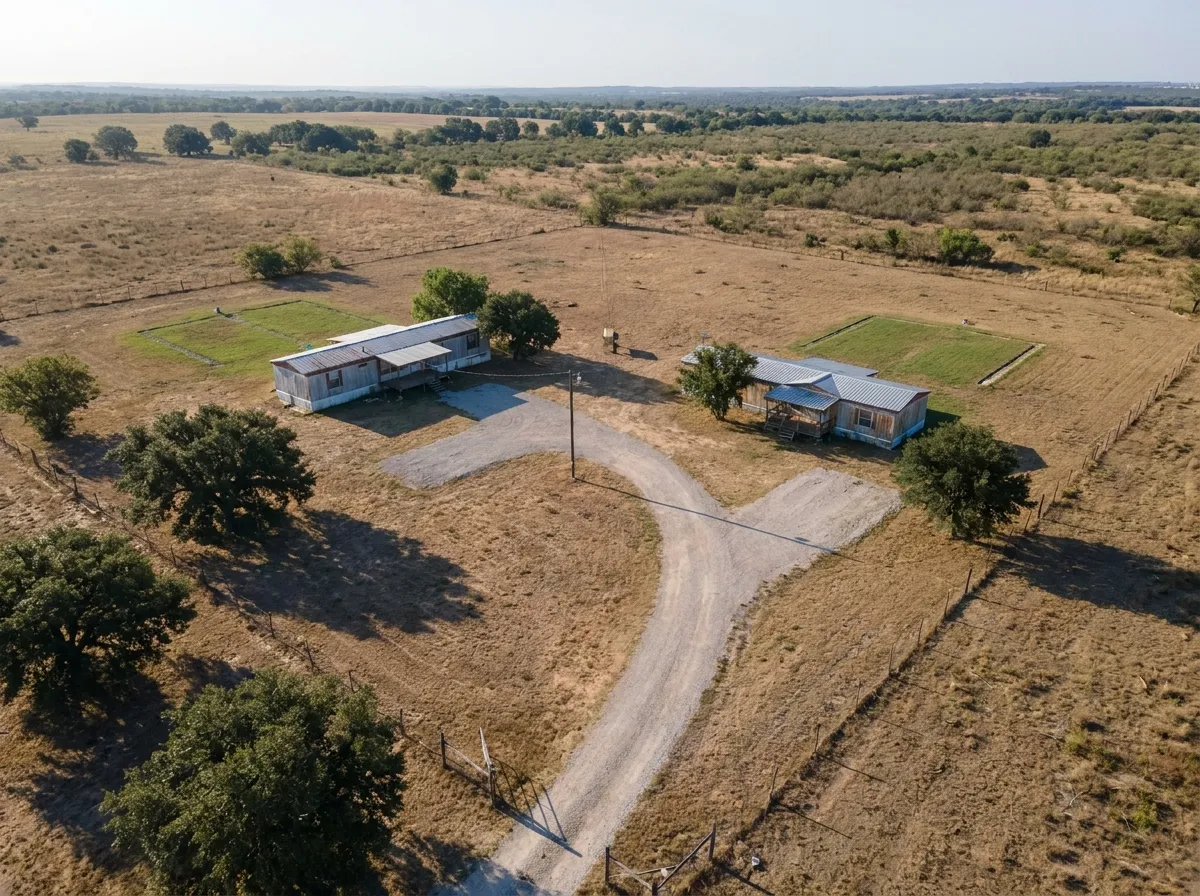
This question comes up constantly around the Austin metro, usually for a good reason. An aging parent needs to be close by. An adult child cannot afford a house. There is land in the family and room on it.
The answers people get are all over the map, because there genuinely is no single statewide rule. What you have instead is five separate gatekeepers, each of which can stop the project independently, and which one binds depends entirely on where the property is. Anyone who tells you a flat "one home per acre in Texas" is repeating something they heard. Ignore it and work the actual checks.
Start by knowing what a Texas county can and cannot do
This surprises people from other states. Texas counties do not have general zoning authority. A commissioners court cannot adopt a comprehensive zoning ordinance for unincorporated land.
Texas Local Government Code Chapter 232 gives counties authority over plats and subdivisions in the unincorporated area. The same statute expressly withholds the power to regulate the use of a building or property for residential, business or industrial purposes, the bulk, height or number of buildings on a tract, the size of a building, or the number of residential units per acre.
So when someone says the county limits you to one manufactured home per acre, what they are describing is not zoning. It is a septic constraint, a platting requirement, or a private deed restriction wearing a county badge. Find out which, because they have different solutions.
The exception is land inside a city's limits, where zoning does apply, or inside a city's extraterritorial jurisdiction, where Chapter 242 governs how city and county subdivision authority is divided. Austin, San Marcos, Kyle, Buda, Pflugerville and Georgetown all have meaningful ETJs, and land that feels rural is frequently inside one.
Gate one: sewage capacity, which decides most of these
On-site sewage facilities in Texas are governed by the Texas Commission on Environmental Quality under 30 Texas Administrative Code Chapter 285. The permit is typically issued and inspected by a local authorized agent, usually a county or county health district TCEQ has approved for that role. Where none exists, the work runs through a TCEQ regional office.
The relevant points for a second home:
Your existing system was sized for one dwelling. OSSF design flow is based on the dwelling served. A second home means expanding, replacing or duplicating the system, which requires a permit and a new site and soil evaluation by a licensed site evaluator or professional engineer.
The site has to physically have room. This is where it ends for a lot of properties. A second disposal area needs unobstructed space with the required separations from wells, property lines, water lines, the homes and any surface water. On Blackland clay through eastern Travis, Caldwell and Bastrop counties, conventional drainfields are frequently ruled out and aerobic spray systems are the norm. A spray field is not small, and an aerobic system carries an ongoing maintenance contract, so a second one is a second recurring cost.
Lot size minimums bite if you subdivide. Under 30 TAC 285.4, for subdivisions of single family dwellings platted or created after the rule's effective date using individual OSSFs, the minimum lot size is at least one-half acre where served by a public water supply and at least one acre where it is not. That is not a limit on an undivided tract. It becomes the limit the moment you carve the second home its own parcel.
There is a ceiling on the OSSF pathway. Total sewage flow for the tract has to stay within the limits Chapter 285 sets for on-site systems. Beyond that you need a permitted wastewater treatment facility.
One flexibility is worth knowing. Chapter 285 contemplates an owner transporting wastewater from a dwelling on an existing small lot to an OSSF at another location, provided both properties have the same owner and no authorized OSSF can be installed on the lot with the dwelling. Narrow, but on an awkward family tract it sometimes unlocks the project.
Get the site and soil evaluation before you buy the second home. It is the cheapest step and the one that tells you whether the rest is real.
Gate two: to divide or not to divide
Two homes on one undivided parcel. No platting is triggered, which is simpler and faster. The cost is that the homes cannot be sold separately, because there is only one piece of land. Lenders and title companies handle this awkwardly, and a future sale means selling the whole thing to one buyer. For two branches of a family with different long-term plans, that creates a problem you will meet later.
Divide the tract so each home has its own parcel. This generally triggers county subdivision and platting requirements under Chapter 232, and inside an ETJ, the Chapter 242 allocation determines who reviews it. Platting means surveys, plat review, possibly road frontage and access requirements, and time. It also means the 285.4 lot size minimums now apply to each new lot.
Neither is wrong. Pick deliberately.
Gate three: utilities, which have their own rules
Utility providers have their own service policies, and those policies are not bound by what the county can or cannot regulate.
Water. A rural water supply corporation typically has a tariff governing how many service connections a tract gets and what a second one costs, often expressed in living unit equivalents. Some will not set a second meter without a separate legal lot. System capacity matters too, and in growing parts of Hays and Caldwell counties that is a real constraint.
Electric. Out here this is usually a cooperative such as Pedernales or Bluebonnet rather than a retail provider you choose. A second service drop involves a work order, a staking visit, a construction estimate if line has to be extended, and your own meter pole and loop. Policies on a second meter for one parcel differ by provider. You will also need a county address assigned before anyone connects it.
Get service availability and estimated cost in writing from both before you commit.
Gate four: the deed, which outranks the county
This catches people who correctly learned that Texas counties have no zoning and concluded they could do anything.
Private deed restrictions run with the land and bind you regardless of what the county can regulate. Older rural Central Texas deeds frequently restrict a tract to a single family residence, prohibit manufactured housing entirely, set minimum square footage, or require any dwelling to be site built. Restrictions in a platted subdivision are easy to find. Restrictions buried in a 1962 deed on a family tract are not, and neighbors can still enforce them.
Pull the full chain of title and read it. Our guide to deed restrictions and manufactured homes in Texas counties covers what to look for. A property owners association is a separate set of rules on top.
Gate five: floodplain
Counties administer floodplain development permits to stay in the National Flood Insurance Program, and that authority is real even where zoning authority is not. Along the Colorado, the San Marcos and the Blanco it matters. Check the map for the specific building site, because a large tract can be partly in and partly out.
The home side, and the tax side
Each manufactured home is its own legal object in Texas, with its own Statement of Ownership at TDHCA, its own licensed installer, and its own Notice of Installation, Form T, filed within seven days of the set. Each is also separately assessed as personal property unless the owner elects real property treatment, and that election is more complicated when two homes sit on one parcel, because the land is a single account. If you are contemplating converting a manufactured home to real property, work that through before the second home arrives.
The realistic sequence
- Site and soil evaluation, and a conversation with the county OSSF authorized agent about a second system.
- Full chain of title, read for restrictions.
- Confirm city limits or ETJ status, and check the flood map for the actual building site.
- Written service availability and cost from the water provider and the electric co-op.
- Decide whether you are dividing the land. If so, start platting early, because it is the long pole.
- Only then buy the home, with a licensed installer already engaged.
The honest bottom line
On a large unincorporated Central Texas tract with room for a second septic system, no restrictive deed language and a cooperative utility, a second manufactured home is frequently achievable. On a half-acre lot inside a city, or a tract whose deed limits it to one residence, it frequently is not, and persistence does not change that.
The determining facts are property-specific and all discoverable in about two weeks of phone calls and one soil evaluation. Do that work before you buy a home, because a second home on a tract with no approved septic plan is not housing, it is storage. Our overview of Texas manufactured home regulations covers the broader state framework these checks sit inside.
This article is general information about Texas land use, septic permitting and manufactured housing requirements. It is not legal or engineering advice. County authorized agent status, platting requirements, utility service policies, floodplain maps and city ETJ boundaries vary by location and change over time. Confirm current requirements with your county, TCEQ, your utility providers and TDHCA, and consult a Texas attorney about deed restrictions.
Sources: Texas Local Government Code Chapter 232, County Regulation of Subdivisions; Texas Local Government Code Chapter 242; TCEQ On-Site Sewage Facilities program; TCEQ RG-472, On-Site Sewage Facility Rules Compilation (30 TAC Chapter 285); TDHCA Manufactured Housing Division