
When a Texas Manufactured Home Community Closes or Changes Hands: What Chapter 94 Actually Requires
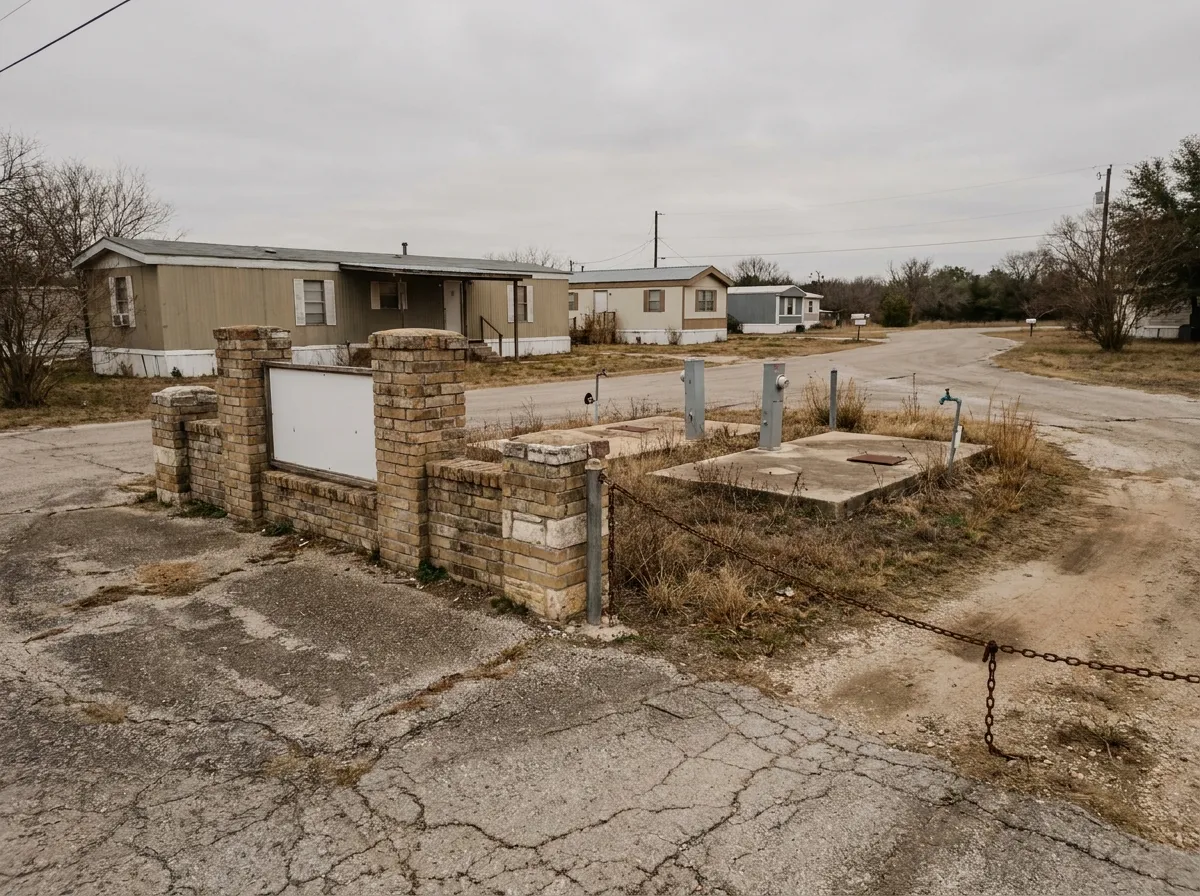
Along the I-35 corridor this is not a hypothetical. Land that held a manufactured home community for thirty years is now worth more as something else, and residents find out through a rumor, a survey crew, or a letter that arrives with no explanation. The first thing to establish is which of three different events is actually happening, because Texas law treats them differently and people routinely assume the worst one.
Three different events, three different rules
The community was sold and will keep operating as a community. This is the most common one. Ownership changed. The land use did not. Nothing in Chapter 94 is triggered by the sale itself. What changes in practice is rent, rules, enforcement and management style, governed by your lease and by the renewal rules below.
The community is closing or the land use is changing. This is the event Chapter 94 addresses specifically, and it carries a 180-day notice requirement.
Your individual lease is not being renewed, while the community continues. That is a 60-day notice event, not a 180-day one.
Being told "the park sold" tells you almost nothing about which of these you are in. Get that answered in writing before you make any decision.
First, confirm Chapter 94 even applies to you
Texas Property Code Chapter 94 governs manufactured home tenancies, and Section 94.002 is narrow about what that means. It applies to the relationship between a landlord who leases property in a manufactured home community and a tenant leasing that property for the purpose of situating a manufactured home on it.
It expressly does not cover a tenancy where the manufactured home is owned by the landlord. If you rent the home itself rather than the lot, you are a residential tenant under a different chapter of the Property Code, and the protections here are not the ones that apply to you. Check your lease before relying on any of this.
The 180-day notice, and exactly what it says
Section 94.204 covers nonrenewal of a lease for a change in land use. The requirements are specific:
- The landlord must give notice not later than the 180th day before the date the land use change occurs.
- The notice goes to the tenant, to the owner of the home if that is a different person, and to any lienholder, though the landlord is only obligated to notify the home owner and lienholder if the landlord was given written notice of their names and addresses.
- The notice must specify the date the land use will change.
- It must inform the tenant, owner and lienholder that the home will have to be relocated.
- The landlord must also post a conspicuous notice in the community stating that the land use will change and when.
Two practical consequences fall out of this.
First, the lienholder notification runs through Section 94.054, which requires a tenant to disclose to the landlord, before the lease is signed, the name and address of anyone holding a lien on the home. If you never made that disclosure, your lender may not be notified. Your obligation on that loan does not disappear because the lot went away.
Second, 180 days is the notice period, not a cure. It is the window in which you have to find a receiving location, secure a licensed installer, obtain transport permits and physically move a manufactured home, in a market where receiving lots with available capacity are scarce. Treat day one as the day the clock starts, not the day to start thinking about it.
The 60-day notice that most residents underuse
Section 94.055 is the provision that affects far more Texas residents than any closure does, and it contains a trap.
A landlord must give notice not later than the 60th day before the current lease term expires, or, on a month-to-month tenancy, not later than the 60th day before the landlord intends to terminate. If the landlord offers renewal on modified terms, the tenant then has 30 days to reject those terms. And here is the part people miss: if the tenant does not provide that rejection notice within the period, the lease renews under the modified terms.
Silence is acceptance. A new owner who raises rent substantially and changes the rules is operating inside this mechanism, and a resident who puts the letter on the counter and does not respond has agreed.
Related, Section 94.053 sets out what a lease has to contain, including a disclosure about the landlord's right to decline renewal if the land use changes, and it makes any provision requiring an increase in rent or fees during the lease term void unless the tenant initialed it. That is a real protection and it is worth checking your own lease against.
Section 94.051 adds another piece that surprises people: a prospective tenant has a legal right to an initial lease term of six months, and the landlord must provide the proposed lease, the community rules and a separate disclosure statement when an application is received.
Our broader guide to Texas mobile home park resident rights goes through the day-to-day provisions in more detail.
What Texas does not provide
Texas does not operate a statewide relocation assistance fund for residents displaced by a community closure, of the kind that exists in some other states. Chapter 94 provides notice. It does not provide money to move.
Some Texas cities have adopted their own local relocation assistance programs, and Austin has one. If the community is inside a city's limits, call that city's housing department and ask. If it is in unincorporated county land, which many Central Texas communities are, there is generally no local program to call.
Assume you are funding the outcome yourself and be pleasantly surprised if you are not.
Your four real options
Move the home. Only feasible if three things are all true: a receiving location will accept the home given its age and condition, a TDHCA-licensed installer will take the job, and the cost is justified by what the home is worth once set up. For many older single-section homes, it is not.
Sell it in place. Only available if the community is continuing. If the land use is changing, there is no lot for a buyer to occupy, and this option does not exist.
Sell it to a buyer who handles removal. The realistic outcome for a lot of older homes. You will not get what the home would fetch on owned land, but you convert an expensive problem into a number and stop the lot rent clock.
Walk away. Almost always the worst outcome. If there is a chattel loan you still owe it. There can also be a property tax lien recorded against the home at TDHCA, which follows the home rather than the land when it is personal property, and that does not vanish either.
What to do in the first week
- Get the event in writing. Sale, closure, land use change or individual nonrenewal. Ask for the specific date.
- Read the notice against Section 94.204. Does it state the date of the land use change and the requirement to relocate? Is a notice posted in the community?
- Diary every deadline. The 60-day renewal notice, your 30-day rejection window, and the 180-day date. Put them on a calendar the day you learn them.
- Pull your Statement of Ownership and confirm it is current with TDHCA, and check the TDHCA tax lien database for your home. You need a clean record for any option you choose.
- Start calling receiving communities immediately, and ask about age restrictions before anything else. Many will not accept homes over a certain age regardless of condition. Our Austin-area lot rent guide gives a sense of the local market.
- Talk to a Texas attorney if the notice looks defective. Legal aid organizations handle manufactured home tenancy questions, and a defective notice is worth raising early.
The thing to avoid
The most damaging pattern we see is waiting. Residents spend the first three months of a 180-day window hoping the plan falls through, then discover in month five that no hauler is available, no community will take a 1994 home, and the only remaining choice is the worst one.
Start the feasibility work in week one, even if you think the closure might not happen. If it does not, you have lost a few phone calls. If it does, you have bought the only thing that actually helps, which is time.
If you are weighing whether to stay in a community at all, our comparison of a community lot versus private land walks through what changes when you own the ground.
This article is general information about Texas Property Code Chapter 94 and is not legal advice. Statutes are amended, and the facts of an individual tenancy matter. For advice about your situation, consult a Texas attorney or a local legal aid organization.
Sources: Texas Property Code Chapter 94, Manufactured Home Tenancies; Texas Law Help, Landlords and Tenants Guide for Manufactured Home Communities; TDHCA Tax Lien Information, Manufactured Housing