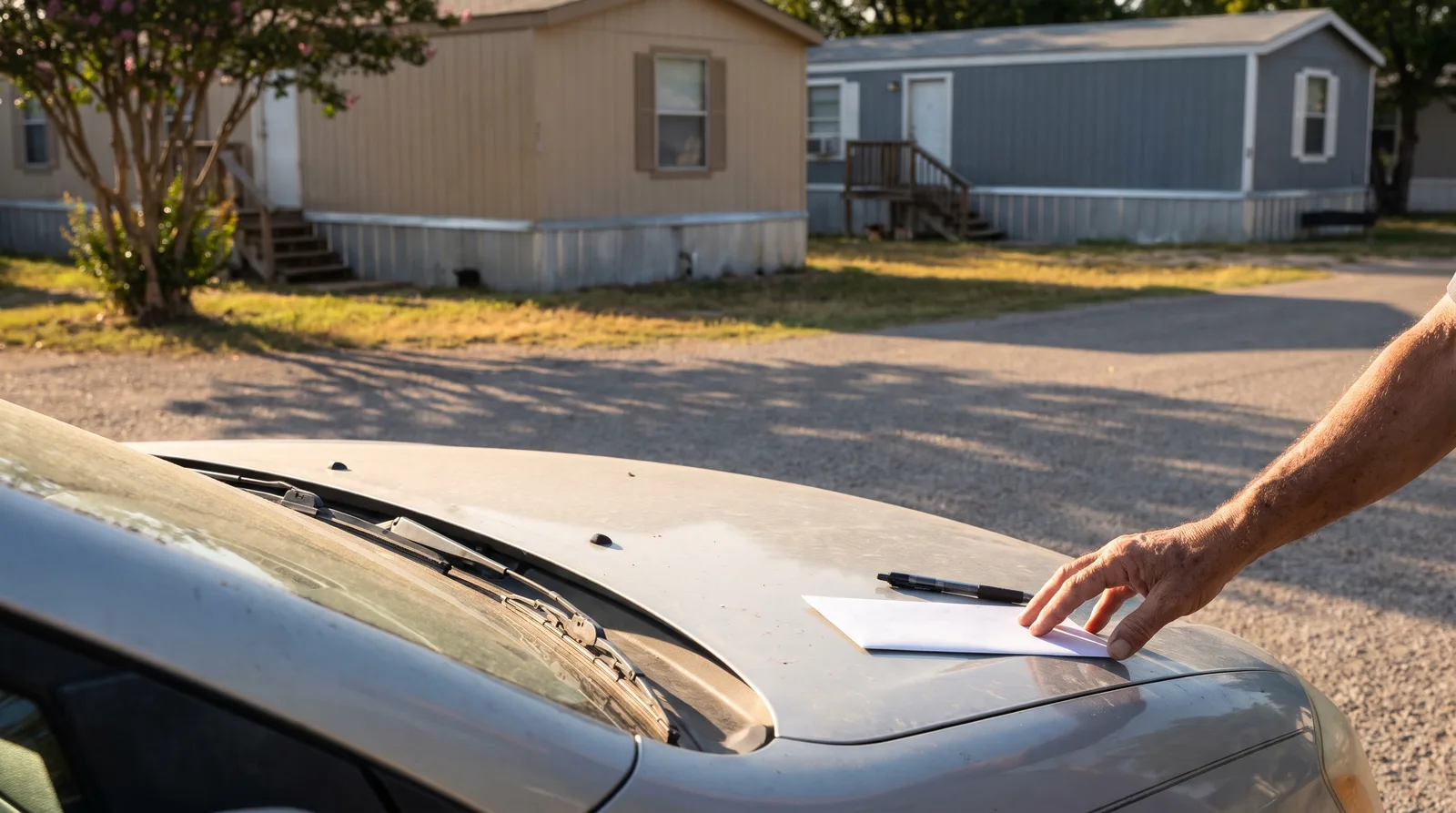
Your deposit goes with a signed purchase agreement, usually reserves the home for you, and comes off what you owe at closing. Pay it only by cashier's check, bank wire or the payment link we send you. On our usual agreement, if the community or your lender turns you down after you applied on time and honestly, the sale is canceled and the deposit goes back to you.
What the deposit does
Until a buyer signs a purchase agreement and pays a deposit, the seller keeps showing the home and may go with the first buyer who can pay. Once you've done both, the home is usually reserved for you and other showings are paused. Eight buyers in the past year asked us how to hold a home so nobody else bought it first, and that's the answer we gave them.
We hold the deposit while you finish the steps before closing. At closing, it's counted toward the price, so you pay the rest.
Keep it separate from what the community asks for. If the home stays in a community, the community usually wants its own deposit and your first month's lot rent when it approves your lease, and that money goes to the community. Our lot rent guide covers what Austin-area communities charge each month.
How much it is
The amount is written in your purchase agreement before you sign. As an example, the deposit on our sales has typically been about $5,000. It can be less. Three buyers in the past year asked us how much it would be or whether it could be lower, and in one of those sales we agreed to a lower deposit than usual. If the usual amount is hard for you, say so before the agreement is written.
How to pay it
In the past year, 17 buyers asked us how to pay the deposit or the balance, and who to pay. One asked, "to whom do I make the cashier check to ?" On our sales, you pay one of these ways:
- A cashier's check. We'll tell you exactly who to make it out to.
- A bank wire. Use only the wire details we give you.
- Our online payment link. You can pay by debit through it. It has a limit, so a large payment goes by wire instead.
Don't plan on using a credit card. If you'd like to pay some other way, such as a money order, ask us first. Whichever way you pay, the money comes to us, not straight to the seller, and we pay the seller at closing.
When it comes back
Eight buyers in the past year asked us what happens to the deposit if the park or the lender says no. One wrote:
"say for whatever reason the park doesn't approve application is the deposit refundable or will it automatically be forfeited."
Our purchase agreements make the sale depend on that approval. Here's how the deposit usually works under them. Your own signed agreement is what counts, so read its deposit section before you pay.
| If this happens | On our usual agreement |
|---|---|
| The community or lender turns you down after you applied on time and honestly | The deposit goes back to you, and the sale is canceled |
| You didn't apply, or can't show that you did | You can lose the deposit |
| You're approved but don't close by the agreed date | You can lose the deposit |
The words that matter in the first row are "on time and honestly." The agreement expects you to send the community and the lender what they ask for, on time, and to be able to show you did. What you pay the community or a lender to apply is separate from the deposit, and our agreement doesn't pay it back.
When buyers have pointed out a line in the deposit section that wasn't clear, we've reworded it. If anything in yours reads two ways, ask us before you sign.
Found the home you want?
Tell us which one. We'll explain the deposit, the ways to pay it and what your agreement says before you send anything.
Tell Us What You're Looking ForPrices, lot rents and community rules change, so check each listing for its current details. This article is for general education only. We aren't lawyers, accountants or financial advisors, and nothing here is legal, tax or financial advice of any kind.