
Buying a Manufactured Home From an Estate or at a Tax Sale in Texas
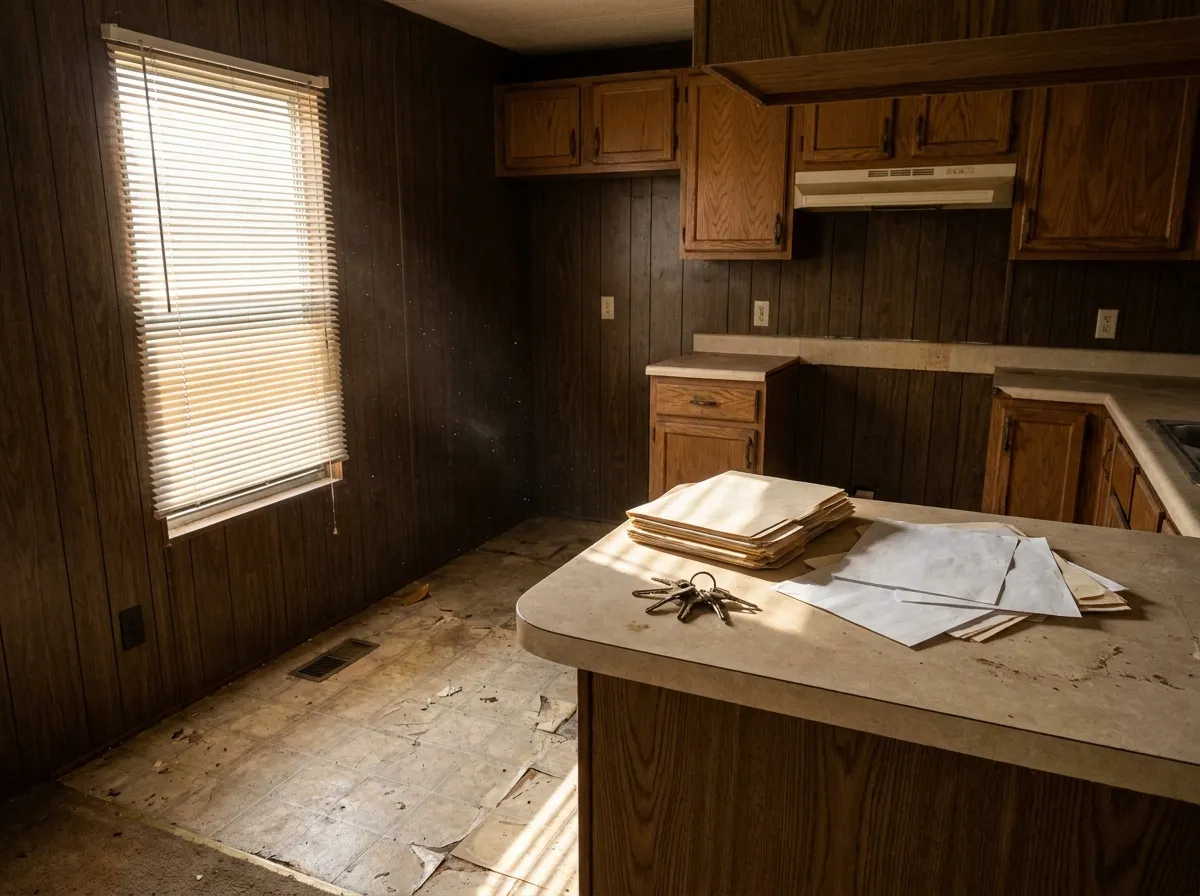
Estate homes and tax sale homes are where the genuinely cheap inventory is in Texas manufactured housing. They are also where most of the unfixable title problems live, and the two facts are related. The price is low because somebody could not clear the paperwork.
That does not mean avoid them. It means verify before you commit money, because the checks are cheap and the failures are permanent.
The one record that governs everything
In Texas, ownership of a manufactured home that is personal property is established by the Statement of Ownership issued by TDHCA. Not a bill of sale. Not a deed. Not possession. Not a dead relative's word to the family.
We cover how the document works and how transfers are filed in our guide to the Texas Statement of Ownership. What matters here is a narrower question: can a Statement of Ownership actually be issued in your name at the end of this transaction? If the answer is no, or unknown, nothing else about the deal matters.
Transfers that happen by operation of law
Texas Occupations Code Chapter 1201 handles this. Section 1201.212 addresses transfer of ownership by means other than an ordinary sale, including by inheritance, devise or bequest, and by bankruptcy, receivership or judicial sale.
That is the statutory hook for both situations here. What varies is the documentation TDHCA requires, which depends on facts you need to establish early:
- Was there a will, and was it probated?
- Is an administration open, and is there an executor or administrator with authority to sign?
- Did the estate go through a small estate affidavit, a muniment of title, or nothing at all?
- Are all the heirs identified, located and in agreement?
TDHCA publishes the documentation it accepts for each path in its Statement of Ownership instructions, and you should read them rather than assume. Do not accept "the family all agrees" as an answer. TDHCA does not act on agreement, it acts on documents.
There is also a newer option worth knowing for your own planning. Recent changes to Chapter 1201 allow an owner to designate a beneficiary on the statement of ownership so the interest transfers on death. It exists precisely to prevent the situation this article is about.
The estate home: what to check, in order
1. Whose name is on the current Statement of Ownership? If it is the decedent's, you are in a normal, workable probate situation. If it is someone who died before the decedent, you have a double gap, and clearing two generations of transfers is materially harder and slower. This is the check that most often ends a deal, and it takes one search to run.
2. Is there a lien recorded on the ownership record? A paid-off chattel loan that was never released still shows. Tracking down a release from a lender that has since been acquired, renamed or dissolved can take weeks or months. Find it before you are under contract, not during.
3. Is there a recorded tax lien? More on this below, and it is its own check.
4. Who owns the land? This is the estate-specific landmine. Very often the home is personal property sitting on land that was also in the estate, and the land is going to different heirs, being sold separately, or tangled in its own probate. You can have clean title to a home with nowhere to legally keep it.
5. If it is in a community, what is owed? Back lot rent, and whether the community will approve you as a resident at all. A community can decline a buyer, and some will not accept homes over a certain age.
6. Who has been paying the personal property taxes? In estates, frequently nobody, for years. Our overview of property taxes on manufactured homes in Texas explains how the home is assessed as personal property.
Tax liens: the check almost nobody runs
This one is specific to Texas manufactured housing and it is genuinely useful.
Under Texas Tax Code Section 32.03, tax liens against manufactured homes must be recorded with TDHCA. TDHCA states that for a lien to be recorded for the previous tax year, the filing has to be received by the department by midnight on 30 June. TDHCA then maintains a searchable tax lien database that anyone can use.
Section 32.014 adds the detail that decides who is exposed. If the owner elected to treat the home as real property under Section 25.08, the tax lien attaches to the land. If the owner did not, the tax lien on the manufactured home does not attach to the land it sits on. It travels with the home.
Read that again if you are buying a chattel home. The lien follows the house, not the dirt. A home you move to your own property can arrive carrying a tax lien from the county it left.
There is also a wrinkle worth knowing. When a home's label or serial number cannot be matched to an existing ownership record, TDHCA files the lien in a separate "Homes Without Ownership Records" database, and those are still valid liens. So a clean search against the ownership record is not automatically a clean search. Check both.
Run the TDHCA tax lien search on any estate or tax sale home before you bid. It is free and it takes a minute.
Tax sales: what you are actually buying
Delinquent tax collection on a manufactured home taxed as personal property is handled by the taxing unit, typically through the county's delinquent tax attorney, and the procedure and notice requirements differ from a real property tax foreclosure. Confirm the specifics with that taxing unit's attorney for the sale you are looking at, because the mechanics are not uniform.
What is consistent enough to say plainly is the list of things a tax sale does not automatically give you:
- A lot. The home sits on ground somebody else controls. The landowner or community may want it gone, may want back rent, or may want nothing to do with you.
- Possession. Homes at tax sale are sometimes occupied, and removing an occupant is a legal process, not a conversation.
- Clear title against other liens. A chattel lienholder's interest is a separate matter from the taxing unit's.
- An inspection. You are usually bidding on a home you have seen from the outside, if at all. Assume the roof, the floor and the plumbing are all questions.
- A Statement of Ownership. That is the whole game, and it comes last.
Tax sales can absolutely work. They work for buyers who have run the ownership record and the lien databases in advance, who have a receiving location arranged, who have priced a move, and who are comfortable losing the bid amount if the paperwork does not resolve. They do not work as a first manufactured home purchase.
The timing rule that catches sellers
Section 1201.206(h) provides that a person selling a home to a consumer for residential use who fails to file the application for a Statement of Ownership and the fee before the 61st day after the date of sale may be assessed a late fee by TDHCA.
In an estate or tax sale purchase you are frequently the party doing the filing, and the point is the same either way: do not let the paperwork sit. A transfer filed six months later, after a family member has moved or a document has gone missing, is much harder than one filed in week two.
When to walk
These are the situations where the discount is not a discount:
- The ownership record names someone who died before the person whose estate is selling.
- There is an unreleased lien from a lender that no longer exists, and nobody can produce a release.
- Heirs are not all identified, located and in agreement.
- The land question is unresolved and there is no confirmed place for the home to go.
- The home is pre-HUD Code, built before 15 June 1976, and your plan requires financing or a community that accepts it.
- TDHCA cannot tell you what documentation would allow a transfer.
A cheap home you cannot title is not an asset. It is a storage problem with taxes attached.
The short version
Search the ownership record. Search both TDHCA lien databases. Establish the probate path and confirm it with TDHCA before you pay anything. Settle the land question separately from the home question. Price the move. Then decide.
Done in that order, estate and tax sale homes are one of the better values in Texas manufactured housing, and our guide to buying a used home under $50,000 covers what to look for in the home itself once the paperwork path is clear.
Done in the other order, they are the most expensive cheap homes you will ever buy.
This article is general information about Texas manufactured housing ownership records, probate and tax collection. It is not legal or tax advice. Statutes, forms, fees and TDHCA procedures change, and tax sale procedures vary by taxing unit. Consult a Texas attorney and confirm current requirements with TDHCA and the relevant taxing unit before acting.
Sources: Texas Occupations Code Chapter 1201, Manufactured Housing; TDHCA, Applying for a Statement of Ownership; TDHCA Tax Lien Information, Manufactured Housing; Texas Tax Code Chapter 32, Tax Liens and Personal Liability